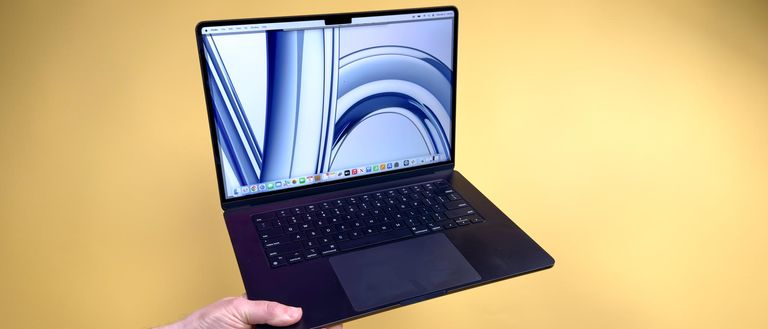
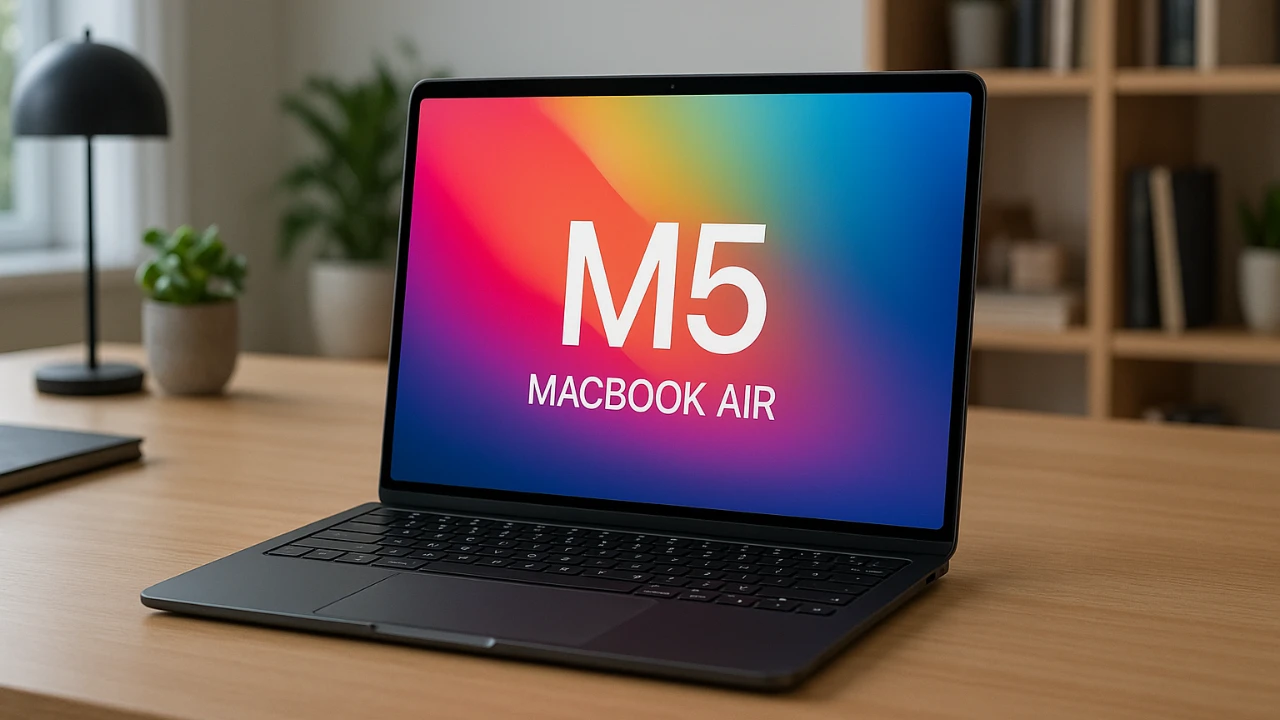


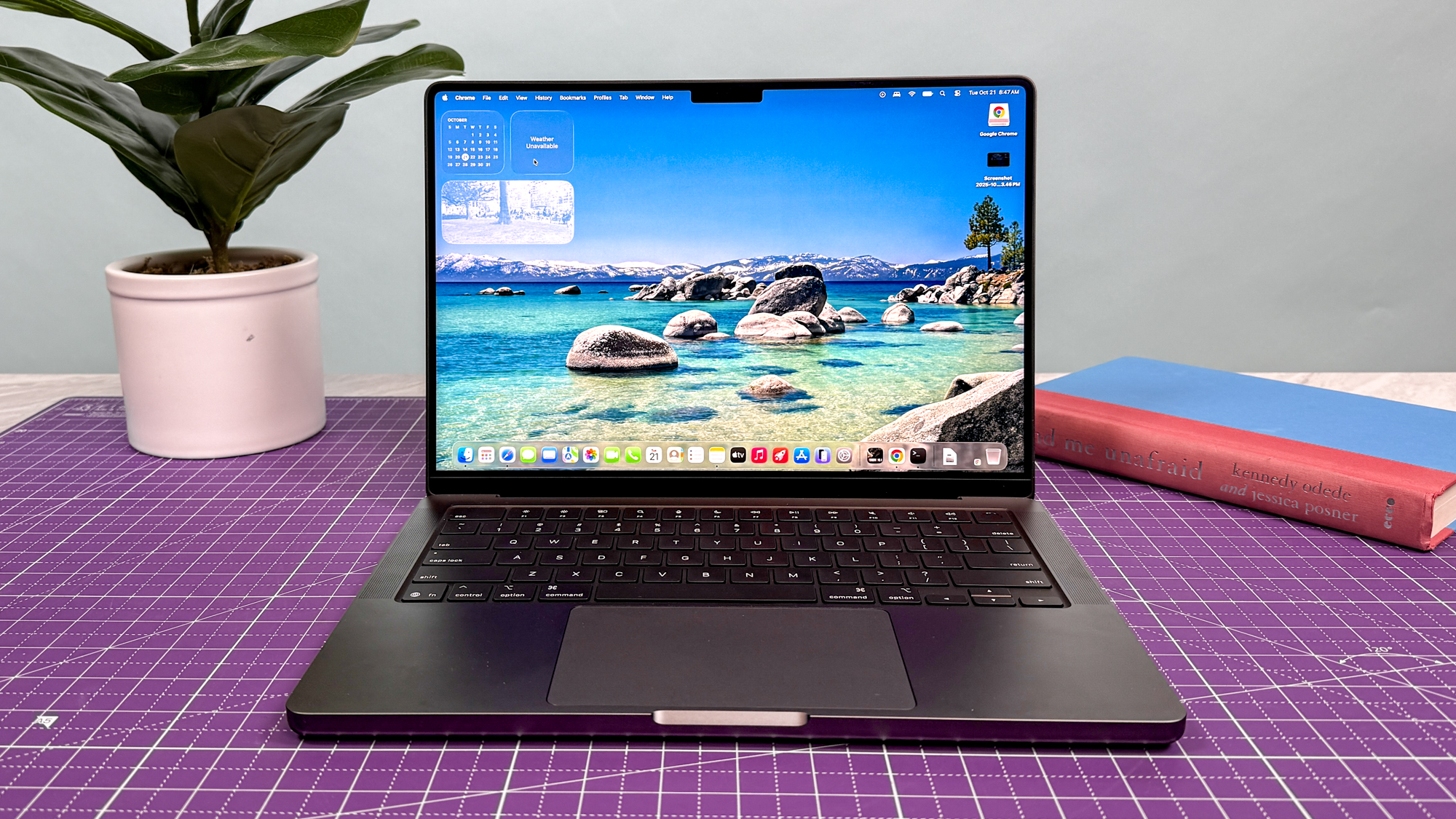
Apple MacBook Air 15 M5 Review: Fanless and Untouchable?

There's a moment when you're using the MacBook Air 15 M5 where you realize the fan you're waiting to kick in... never does. Not when you're exporting a video. Not when you're running a dozen browser tabs alongside a spreadsheet and a Zoom call. Not ever. And somehow, it's faster than almost anything else on the market.

Performance That Shouldn't Exist in a Fanless Machine
Let's start with the number that keeps circulating in tech circles: the base M5 chip sits within 5% of the M1 Ultra in multi-core performance. That's a chip Apple once reserved for its most powerful desktop workstations, now running completely passively in a thin laptop with no cooling system whatsoever. Intel and AMD aren't close, and reviewers across the board agree on this — even self-described macOS skeptics are admitting they're "getting a little tempted."
Real-world consequences of that performance ceiling are minimal for most users. The Air handles productivity, creative work, and light-to-moderate creative tasks without hesitation. Where it does have a ceiling — sustained extreme workloads like hours of 3D rendering — the lack of active cooling will eventually throttle performance. For those edge cases, the MacBook Pro exists. But for the vast majority of buyers? The Air will never feel slow.

The Storage Win Buyers Have Been Waiting For
Apple finally doubled the base storage to 512GB — and the community reaction was genuinely enthusiastic. This was a long-overdue fix; the 256GB base on previous Airs was a legitimate frustration. The 15-inch M5 now starts at a configuration that actually feels complete out of the box.
The value trajectory is also worth noting. One Reddit user did the math: in 2022, getting a 10-core GPU, 24GB RAM, and 1TB on an M2 Air cost $2,099. The equivalent M5 Air config today? $1,499. A $600 price drop in four years for meaningfully better hardware. At the premium end of the market, that's a notable shift.
Battery Life: The Real Reason People Switch
Multiple users coming from Windows laptops describe the battery experience as almost disorienting. A first-time Apple user documented their experience switching from a Windows ultrabook that idled at 8–10W doing essentially nothing, despite every optimization trick in the book. The MacBook's efficiency under real workloads is a different category of experience — not just a spec-sheet claim but something reviewers and switchers consistently call out as a genuine revelation.

The M5's efficiency architecture means the 15-inch chassis can sustain all-day use comfortably. This is the product's single most compelling feature for anyone who's wrestled with Windows battery management. Apple's unified memory architecture simply doesn't waste power the way discrete component designs do.
What the Notebookcheck Review Actually Surfaced
The detailed technical review flagged two things worth knowing:
- Apple's new N1 Wi-Fi chip is genuinely impressive — it edges out Intel's BE201, Broadcom's 14E4, and Qualcomm's FastConnect 7800 in both average and minimum 6GHz Wi-Fi throughput. For a first-generation in-house Wi-Fi chip competing against companies with decades of experience, that's a remarkable result.
- Display efficiency at max brightness lags slightly behind comparable IPS panels. The LCD panel, while good, consumes more power at peak brightness relative to its nit output. Not a dealbreaker, but worth noting for users who run at maximum brightness constantly.
The One Genuine Frustration: Still 60Hz
This is where the community gets vocal. The MacBook Air 15 M5 ships with a 60Hz display, and for anyone who's used a 120Hz screen — on a phone, monitor, or any other laptop — going back is painful. Multiple reviewers flag this as the Air's most glaring omission in 2026. Apple has put 120Hz ProMotion displays in its Pro line and even base iPhones, making the Air's 60Hz panel feel like a deliberate product segmentation decision rather than a cost constraint.
If you're coming from a 60Hz monitor and haven't experienced high refresh rate, this won't bother you at all. If you have? It's a real adjustment.


Who Should Buy This
The MacBook Air 15 M5 is the right machine for: students, professionals doing content work, developers, anyone who travels frequently and cares deeply about battery life, and anyone currently fighting Windows power management who wants out. The 15-inch form factor specifically suits people who want a larger screen without the weight and price premium of the MacBook Pro.
It's probably not for: anyone who needs sustained high-performance workloads (the Pro handles those better with its active cooling), gamers (macOS gaming library limitations still apply), or users who require a high refresh rate display and aren't willing to compromise.

Frequently Asked Questions
Q: Does the MacBook Air 15 M5 overheat under heavy use?
A: It doesn't have a fan, so it manages heat through throttling rather than active cooling. For everyday and creative work it handles everything without issue, but sustained extreme workloads will eventually reduce performance. For those use cases, the MacBook Pro with active cooling is a better fit.
Q: What's the starting price of the MacBook Air 15 M5?
A: The 13-inch M5 Air starts at $1,099. The 15-inch configuration with 10-core GPU, 24GB RAM, and 1TB storage can be had for $1,499 — a significant price reduction compared to equivalent specs on the M2 generation.
Q: Is the MacBook Air 15 M5 worth it over the M4?
A: The M5 brings meaningfully better performance, the new N1 Wi-Fi chip (which outperforms competitors), and the jump to 512GB base storage. If you're buying new, the M5 is clearly the better purchase. If you already own an M4, the upgrade is less urgent.
Q: Does the MacBook Air 15 M5 have a 120Hz display?
A: No. It ships with a 60Hz LCD display. This is the most commonly cited complaint among reviewers and a notable omission at this price point in 2026.
Q: How does the MacBook Air 15 M5 compare to Windows alternatives?
A: In efficiency and battery life, it leads the category by a meaningful margin. Performance-per-watt is class-leading. The tradeoffs are macOS exclusivity, no high refresh rate display, and the usual Apple premium pricing — though the price gap with Windows competitors has narrowed considerably over recent generations.
Posted on March 9, 2026